
Alexander Grass Scholars
Undergraduate Research Program






About the Program
The Alexander Grass Scholars Program offers undergraduate students of all majors a funded opportunity to explore humanities research through mentorship, collaboration and community-engaged learning. Emphasizing academic inquiry in the humanities, experiential project-based learning through community partnerships, and interdisciplinary humanities-based research methods, the program invites students to engage humanistic questions through coursework, collaborative projects, mentorship and independent research. Along the way, students gain hands-on experience that helps them deepen their interests and grow as scholars.


FAQ
Grass Scholars will receive $2,000 in funding paid out as scholarship funds by CHPS in two installments: $1,500 to be disbursed when the student completes the Summer A course, then $500 after participating in the Research Symposium, where students will present their independent project in the fall term.
These funds may be used at your discretion for your own development and to support your research through the fall.
Successful applicants to the Grass Scholars Program will demonstrate the following characteristics:
- Motivated to learn how to apply humanistic research skills like careful reading, interpretation, writing, and communication to questions about human society and culture.
- Enthusiastic about opportunities for humanities-focused collaborations with UF faculty and staff, Gainesville community members, and peers.
- Serious about pursuing humanities research, both in summer group projects and in a fall individual project.
- Committed to working independently in the fall semester, with mentorship from faculty, staff, and graduate students, with the goal of presenting original research at the end of the term.
- Reliable, responsive, and engaged while collaborating with program staff and fellow Grass Scholars.
During the term of the award, a Grass Scholar must:
- Complete a face-to-face, 3-credit Summer A class, IDS 4911, that will introduce humanistic methods and questions and involve completion of a group research project.
- Complete an independent humanities research project in the fall semester.
- Present a humanities research poster at the Grass Scholars Research Symposium in November 2026.
- Maintain active participation in the program by staying connected with program staff and research mentors.
- Engage in the life of the Center for the Humanities and the Public Sphere.
No, you do not need any prior research experience to apply to the program.
No, any major may apply to the program.
In the summer, no. Enrollment and regular attendance is required for the in-person course, IDS 4911, which will meet Monday through Friday at 11:00AM-12:15PM. This course is only available to students enrolled in UF main campus and not UF online.
If you have alternative plans in Fall 2026, such as internship or study abroad, please apply to the program but be in touch with CHPS Grass Scholars Coordinator Alison Walsh (humanities-center@ufl.edu)to discuss the details of your plans.
Please still apply to the program. However, be in touch with CHPS Program Manager Alison Walsh at humanities-center@ufl.edu to discuss the details of your plan.
Once accepted into the program, scholars will be able to submit their order of preference for summer projects. This will be taken into consideration when assigning students to each project.
2026 Partner Organizations & Summer Projects
George A. Smathers Libraries
From Archive to Exhibit: Curating Voices from the Price Library of Judaica Latin American & Caribbean Collection
Project Leader:
Dr. Rebecca Jefferson (Curator, Isser and Rae Price Library of Judaica)
Graduate Mentor:
- Agnieszka Ilwika-Karuna (History)
Description: This project will introduce Alexander Grass Scholars to archival research and exhibition curation using the Price Library of Judaica Latin American and Caribbean Collection(opens in new tab). The collection contains documents related to Jews living in Latin American and Caribbean countries including Argentina, Bolivia, Brazil, Chile, Columbia, Cuba, Mexico, Peru, Uruguay, and Venezuela, particularly comprising documents related to those Jews who fled from Europe during and after World War II. Classes will be held in the library’s Judaica Suite(opens in new tab), where students will gain hands-on experience working with archival materials. Students will learn how library professionals organize archives to facilitate research and how scholars analyze and interpret archival objects. They will also gain insights into methods of curating cultural heritage materials for public audiences. The students’ own research into the collection will culminate in a group-curated exhibition to be showcased at the entrance to the Judaica Suite.
Cotton Club Museum and Cultural Center
Lessons That Last: The Legacy of Gloria Jean Merriex and Black Educational Leadership in Alachua County
Project Leader:
- Dr. Joni Perkins
Graduate Mentor:
- Belkis Abufaur (Anthropology)
Description: This project centers on the life, legacy, and educational impact of Gloria Jean Merriex—one of Florida’s most influential educators—and explores the broader role of Black educators and local historical figures in shaping public education in Alachua County. Students will engage in archival research, community oral histories, and media analysis, including collaboration with the director of the documentary “Class of Her Own.” The project will culminate in an interactive, traveling exhibit paired with educator-ready lesson plans designed for use in local schools and museums, offering students and teachers an accessible way to engage with local history, civic pride, and educational excellence.
Inquire Capitalism
The Business of Relaxation: Student Leisure in a Southern College Town
Project Leader:
- Dr. Sean Adams (History, CLAS Dean’s Office)
Graduate Mentor:
- Dinalo Chakma (English)
Description: GNV Business History explores the experiences of business owners, managers, and family-run enterprises of Gainesville, Florida, starting from the late 19th century through the modern day. This project will focus on businesses that catered to UF students for leisure activities—restaurants, bars, pool halls, gyms, bowling alleys, etc.—and will involve a mix of oral history and traditional archival research to highlight those businesses over the years. The end result will be a standalone addition to GNV Business History’s digital reconstruction of the city’s economic and social landscape over the years.
Samuel Proctor Oral History Program
Alachua County Healers Oral History Project: Sharing Stories of Care and Community
Project Leaders:
- Anna Hamilton, Samuel Proctor Oral History Program Assistant Director
Graduate Mentor:
- Esteban Arango Casas (Classics)
Description: For this project, Grass Scholars will curate physical and digital exhibits for the Samuel Proctor Oral History Program’s new Alachua Healers Oral History Project, an interdisciplinary initiative documenting regional healing traditions. Grass Scholars will use newly recorded interviews, photographs, and archival ephemera to interpret local narratives of care, resilience, and community knowledge. Through guided research, exhibit design and construction, and public storytelling, students will gain hands-on experience in public history and community engagement while contributing to the preservation of North Central Florida’s varied healing traditions.
Other Ways to Get Involved


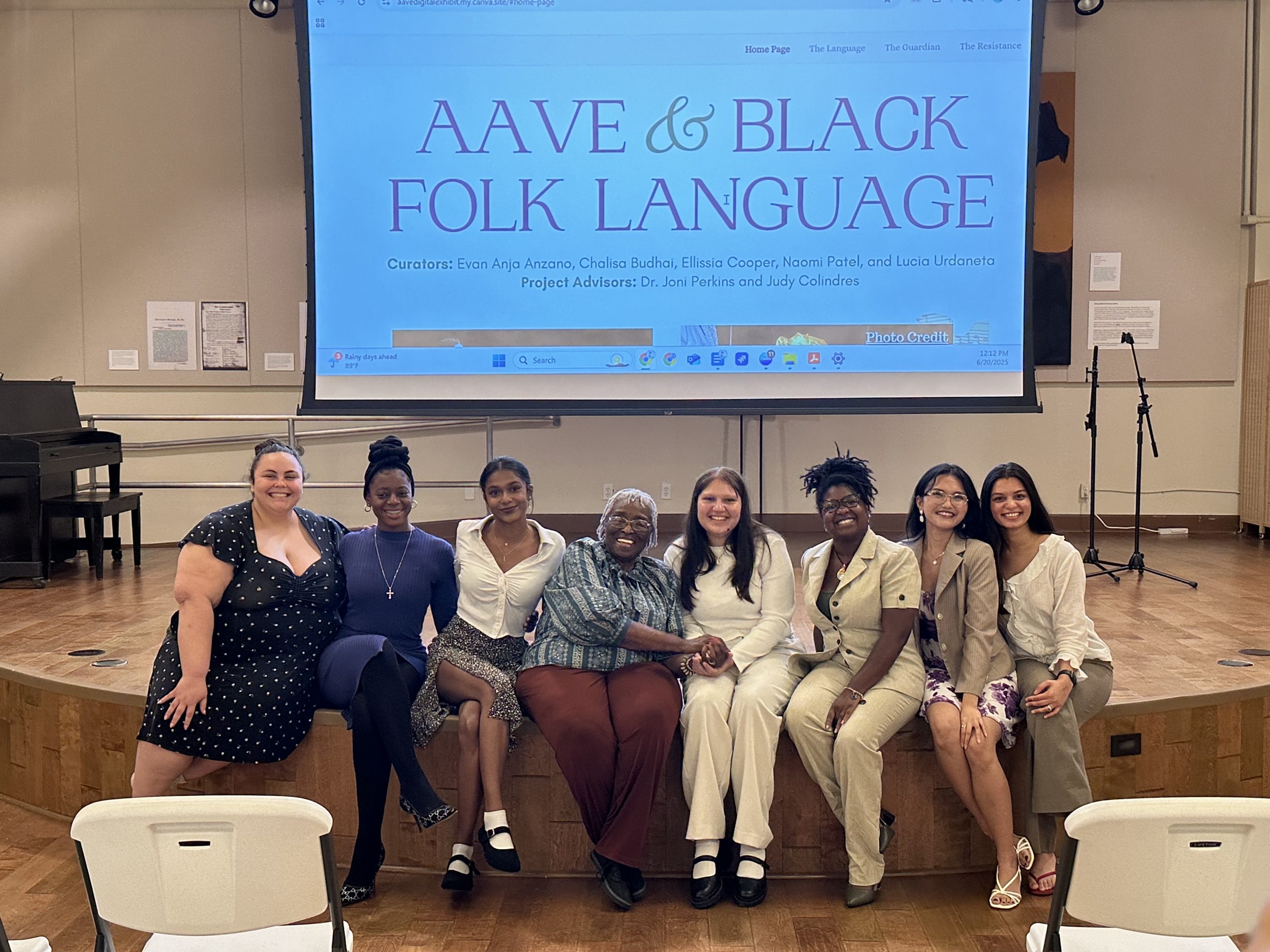
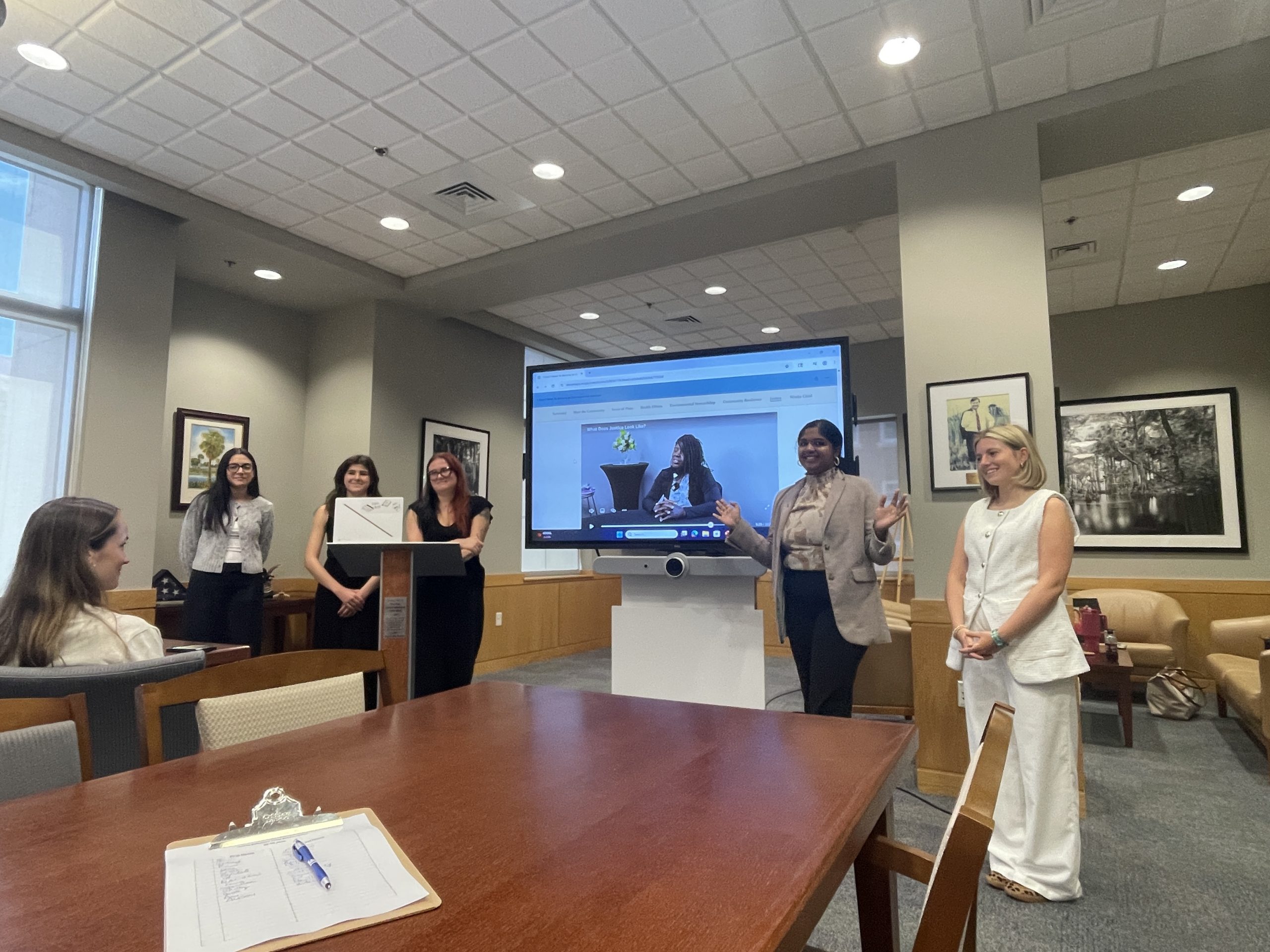
Program News & Archive



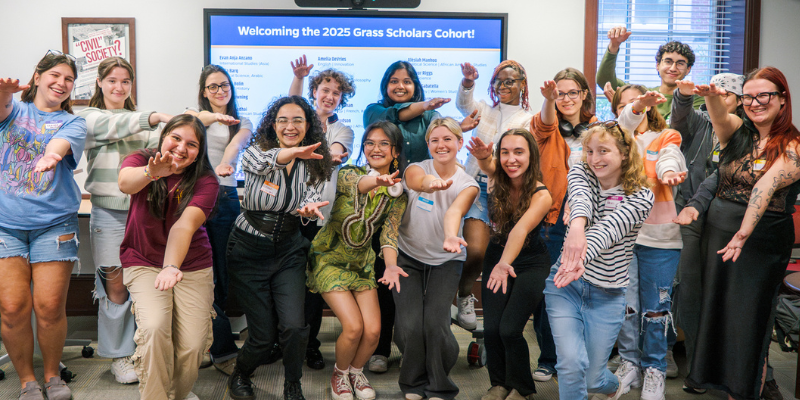

About Alexander Grass
Alexander Grass (1927-2009) was an attorney, businessman, and founder of the Rite Aid Corporation, once a major national retail drugstore chain in the United States. Mr. Grass completed his law degree at UF in 1949. Beyond his success in business, he is remembered for his commitment to community service and his generosity as a community philanthropist. Although Grass originally hailed from and operated his business in Pennsylvania, his generous support of UF’s campus, including the endowed chair in the Center for Jewish Studies, is a testament to the impact of his time as a student here. As noted in a 1997 interview (archived with UF’s Samuel Proctor Oral History Program), the humanities courses he completed at UF fostered an interest in the arts that continued throughout his life.
The Alexander Grass Scholars Program will allow the Center to directly involve undergraduate students in our mission to connect humanities research endeavors with the community where we live and teach. The Center for the Humanities and the Public Sphere is honored to be a part of his lasting legacy.
“there were courses in the humanities that I found to be very helpful to me and that has left me with a real interest in art which has continued through today…”
– Alexander Grass oral history interview, 1997